
8 Major Objectives of Consumer Behaviour – Explained in Detail | Consumer Behaviour Management
Consumer behaviour is the study of how people make decisions about buying, using, and disposing of products and services. Understanding consumer behaviour is very important for businesses, marketers, and organizations because it helps them know what customers want and how they act.
When companies understand their customers, they can make better products, provide better services, and design effective marketing strategies.
The main purpose of studying consumer behaviour is to understand the reasons behind customer actions. Companies use this knowledge to improve their business, satisfy customers, and increase sales.
The objectives of consumer behaviour explain why businesses focus on customer needs, preferences, and buying patterns.
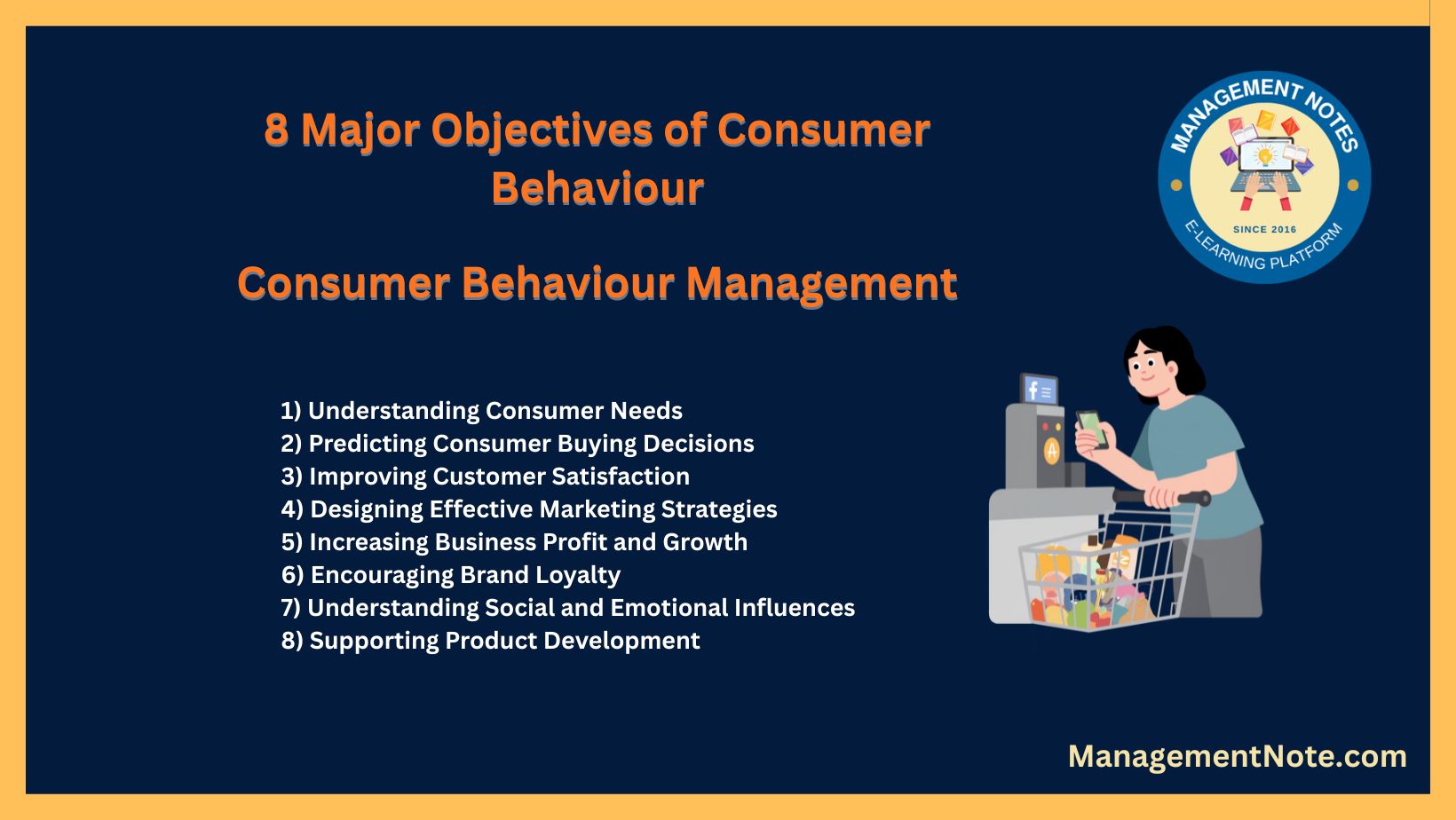
8 Major Objectives of Consumer Behaviour
1) Understanding Consumer Needs
The first objective of studying consumer behaviour is to understand consumer needs. Customers buy products to meet their needs and wants. Some needs are basic, like food, water, and clothing. Others are emotional or social, like buying a smartphone, a branded watch, or a luxury car.
When businesses understand consumer needs, they can design products that solve real problems. For example, a company producing bottled water knows that people want clean and safe drinking water. Similarly, a company producing smartphones understands that people want fast, durable, and easy-to-use devices.
Understanding needs also helps businesses predict what customers may want in the future. For instance, as people become more health-conscious, companies start producing healthy food, fitness products, and eco-friendly items.
2) Predicting Consumer Buying Decisions
Another objective is to predict consumer buying decisions. Consumer behaviour research helps businesses understand how people make choices. Customers may consider factors like price, quality, brand, social influence, and convenience before buying.
By studying these patterns, companies can forecast future demand and plan production, inventory, and marketing campaigns. For example, during festival seasons, marketers know that people will buy gifts, sweets, and clothing. They can prepare special offers, discounts, and advertisements to attract more customers.
Predicting buying decisions also helps reduce business risks. If a company knows what products are likely to sell well, it can invest wisely in production and marketing.
3) Improving Customer Satisfaction
A key objective of consumer behaviour is to improve customer satisfaction. Satisfied customers are loyal customers. When businesses understand what customers like and dislike, they can provide products and services that meet expectations.
For example, if a restaurant studies customer behaviour, it may notice that people prefer online ordering and home delivery. By adding these services, the restaurant satisfies customers and increases sales. Similarly, e-commerce companies study browsing patterns to recommend products customers are more likely to buy.
Improving satisfaction also leads to positive word-of-mouth, which attracts more customers. Happy customers often share their experiences with friends, family, and social media networks.
4) Designing Effective Marketing Strategies
Understanding consumer behaviour helps businesses create effective marketing strategies. Marketing includes product design, pricing, promotion, and distribution. Companies need to know what attracts customers so they can market products successfully.
For example, a company may use bright colors and catchy advertisements to attract young consumers. Or it may offer discounts and loyalty programs to retain existing customers.
Consumer behaviour also guides digital marketing. Online platforms track search history, browsing patterns, and social media activity. This information helps businesses send personalized ads and offers.
Marketing strategies based on consumer behaviour are more accurate and cost-effective because they target the right audience.
5) Increasing Business Profit and Growth
One of the most important objectives is to increase business profit and growth. When companies understand customers, they sell more products, reduce wasted resources, and make better business decisions.
For example, if a clothing brand studies buying habits, it can produce clothes that are in trend and likely to sell fast. This reduces unsold inventory and increases profit. Similarly, understanding online shopping behaviour allows e-commerce businesses to optimize product recommendations and improve sales conversion.
Higher sales lead to business growth. Companies can expand to new markets, launch new products, and strengthen their brand presence when they understand consumer behaviour.
6) Encouraging Brand Loyalty
Consumer behaviour studies also aim to encourage brand loyalty. Customers who trust a brand and are satisfied with its products keep buying from the same company. Loyal customers are valuable because they provide repeat sales and recommend the brand to others.
For example, tech companies like Apple understand consumer behaviour very well. They know why people love iPhones and MacBooks, and they design products that maintain loyalty.
Loyalty also reduces marketing costs. Companies do not need to spend as much on attracting new customers because loyal customers continue to buy their products.
7) Understanding Social and Emotional Influences
Another objective is to understand social and emotional influences on buying behaviour. People do not always buy rationally; emotions, peer pressure, culture, and trends affect decisions.
For example:
- A teenager may buy sneakers because their friends have them.
- A person may buy luxury products to show status.
- Cultural traditions may influence buying gifts during festivals.
By understanding these influences, companies can design better promotions and communication strategies.
8) Supporting Product Development
Finally, studying consumer behaviour helps in product development. Businesses can identify what features customers like or dislike, which allows them to innovate and improve products.
For example, smartphone companies use customer feedback to improve battery life, camera quality, and user interface. Food companies study taste preferences and create new flavors to match customer desires.
When businesses develop products based on consumer behaviour, they reduce the risk of product failure and increase customer acceptance.
Conclusion
The objectives of consumer behaviour focus on understanding customers, predicting their buying decisions, improving satisfaction, designing marketing strategies, increasing profit, encouraging brand loyalty, and supporting product development.
Studying consumer behaviour is not just about selling products; it is about understanding people, their needs, emotions, and preferences. Businesses that understand consumer behaviour can create better products, deliver better services, and maintain strong customer relationships.
In today’s competitive market, the study of consumer behaviour is essential for business success and long-term growth.

MBA- Finance Specialization
I am Smirti Bam, an enthusiastic edu blogger with a passion for sharing insights into the dynamic world of business and management through this website.
I hold a MBA degree from Presidential Business School, Kathmandu, and a BBA degree with a specialization in Finance from Apex College,
- Moonlighting Vs Freelancing: Meaning, Differences & Risks Explained | Human Resource Management (HRM) - September 14, 2026
- Employee Retention Vs. Employee Engagement: Key Differences Explained | Human Resource Management - September 6, 2026
- Talent Acquisition Vs Talent Management: What Is the Difference? - September 2, 2026


