
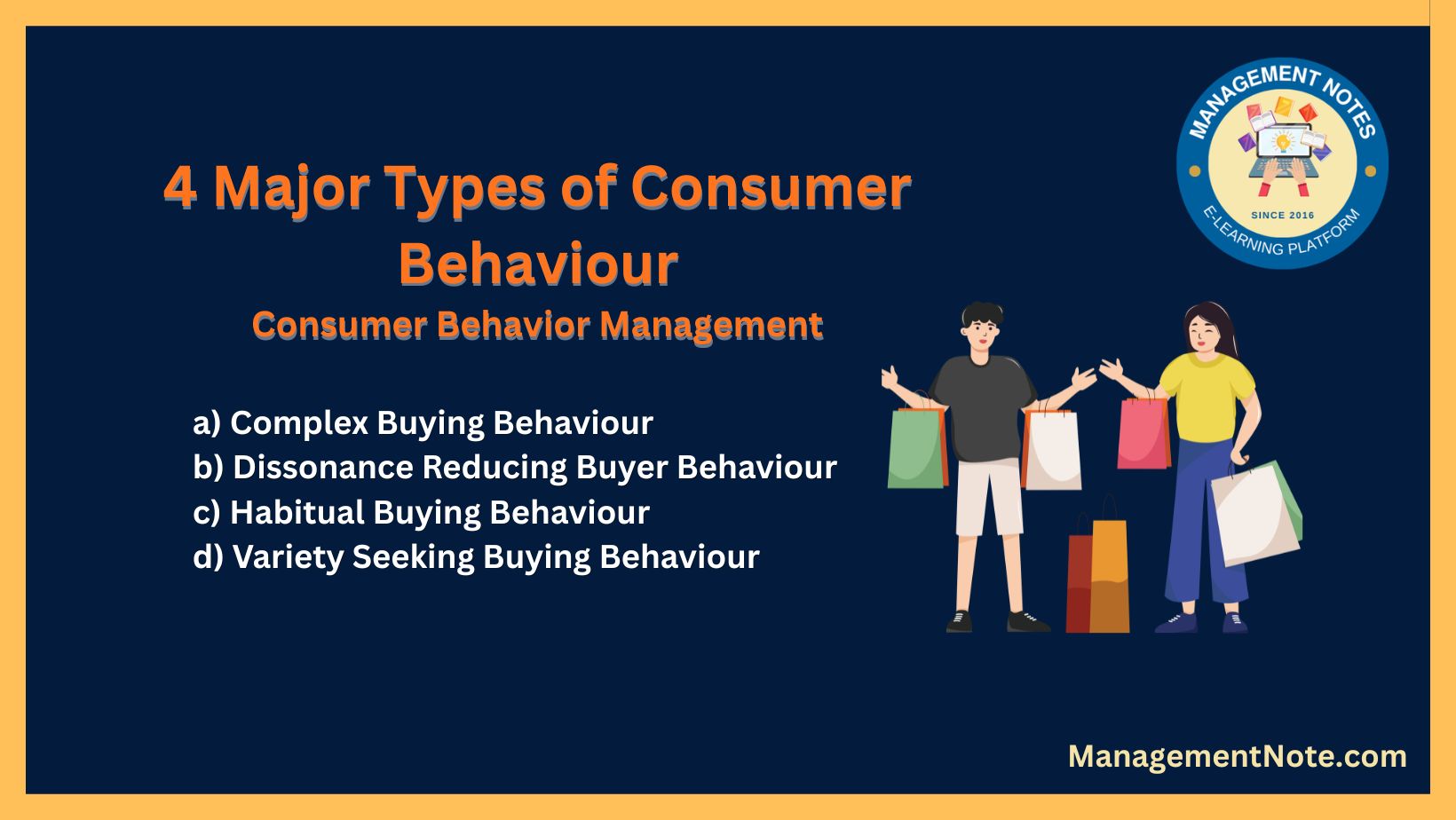
4 Major Types of Consumer Behaviour – Explained in Detail | Marketing Ma
Based on two dimensions, consumer behavior can be divided into four broad categories:
- Involvement Level
- Differences between brands perceived to be significant.
a) Complex Buying Behaviour
The complex buying behavior applies to products with high prices, few purchases, self-expressive, high risks, one-time investments, etc. Despite not knowing much about the product, the buyer takes an active role in the purchase.
He researches the product from different sources, including the company website and sales representatives, and takes advice from friends, experts, and acquaintances, so that he makes the best decision possible.
A consumer evaluates the alternatives and develops a belief and attitude about the product before making a final decision about buying and investing.
| Example of Complex Buying Behaviour | Buying a House, Car, Education Course,etc |
b) Dissonance Reducing Buyer Behaviour
There may be dissonance when the product is expensive, less frequently purchased, and has a high risk, causing dissatisfaction when the consumer fears that he/she might regret the purchase if he/she discovers that other brands offer a better quality and durability product than this one.
This behavior is primarily intended to reduce post-purchase dissonance, resulting from dissatisfaction with previous purchases. Due to the limited choice and high involvement, the customer is unable to identify the differences between various products offered by various brands.
Prior to making the final purchase, he gathers information from different sources and compares and evaluates the alternatives.In addition to price, specifications, availability, and convenience, the product is selected based on these factors.
| Example of Dissonance Reducing Buying Behaviour | Buying a Financial product like Insurance, Buying a diamond ring,etc. |
c) Habitual Buying Behaviour
Habitual Buying Behaviour occurs when a product is economical and frequently purchased, but the consumer has less involvement in which brand they choose. Thus, brand familiarity and availability are the only factors considered before making a buying decision.
A strong brand loyalty is not required for such items to be purchased instead, people buy them out of habit or familiarity with the taste.
| Example of Habitual Buying Behaviour | Purchasing Everyday products like Grocery Items (Rice, Flour,etc) |
d) Variety Seeking Buying Behaviour
Switching brands is not due to dissatisfaction with the previous purchase, but due to variety, i.e. trying something new to avoid boredom. After a little evaluation, the buyer makes the purchase and develops an opinion about the product after consumption.
The concept of Consumer Behavior encompasses a wide range of factors, not just the actual buyer of the product and the act of buying, but also the various roles played by different individuals, such as initiators, influencers, deciders, purchasers, and users, as well as the influence they have on the final purchase decision.
| Example of Variety Seeking Buying Behaviour | Buying potato chips, noodles, soap etc. |

MBA- Finance Specialization
I am Smirti Bam, an enthusiastic edu blogger with a passion for sharing insights into the dynamic world of business and management through this website.
I hold a MBA degree from Presidential Business School, Kathmandu, and a BBA degree with a specialization in Finance from Apex College,
- Moonlighting Vs Freelancing: Meaning, Differences & Risks Explained | Human Resource Management (HRM) - September 14, 2026
- Employee Retention Vs. Employee Engagement: Key Differences Explained | Human Resource Management - September 6, 2026
- Talent Acquisition Vs Talent Management: What Is the Difference? - September 2, 2026


