
Coordination is the Essence of Management – POM | Management Notes
Coordination is the Essence of Management.
Coordination plays a vital role in effective management, serving as the cornerstone that combines and aligns various activities, functions, and resources within an organization.
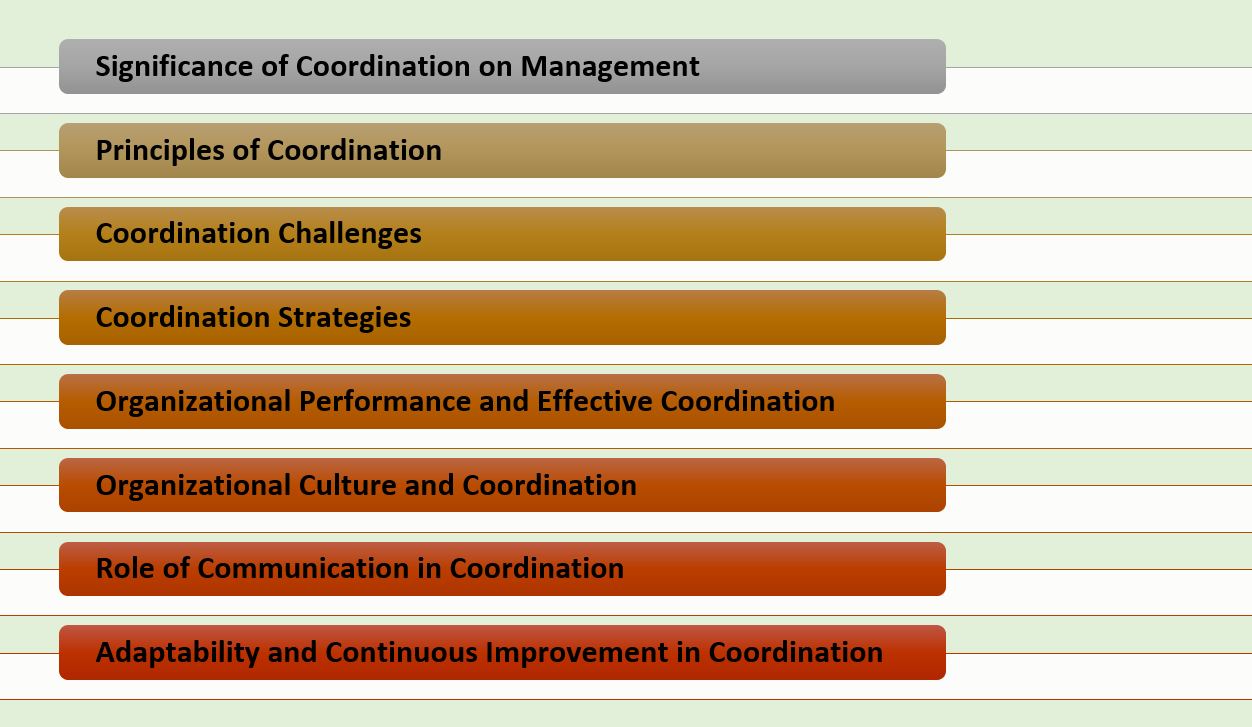
Here we explore the significance, principles, challenges, and strategies for achieving effective coordination, as well as its significance and implications.
Further, it examines the role of coordination in enhancing organizational performance, fostering collaboration, and promoting synergy among departments and stakeholders.
In order for diverse activities, functions, and resources to be harmoniously integrated within an organization, coordination is a fundamental element of management. Organizational goals can be achieved through effective communication, collaboration, and synergy between individuals and departments.
A detailed analysis of coordination is presented below, along with its principles, challenges, and strategies for achieving it. It also examines how coordination fosters a cohesive and productive work environment and enhances organization performance.

Significance of Coordination on Management:
Coordination in Management is an essential component of managing an organization because it binds various elements together and synchronizes them. By ensuring that all activities are carried out in a coherent manner, efficiency is maximized, and conflicts or redundancies are minimized, it ensures a high level of efficiency.
In this section, coordination is highlighted as important in management, particularly in terms of promoting unity of effort, facilitating resource allocation, and enhancing organizational flexibility. Adapting quickly to changes, capturing opportunities, and overcoming obstacles comes from effective coordination.
Principles of Coordination:
Coordination is governed by a number of fundamental principles that contribute to its effectiveness. There are several key principles to coordination, such as establishing clear goals and objectives, maintaining open communication channels, building mutual trust, and establishing feedback mechanisms.
In order for individuals and departments to coordinate effectively, clear goals and objectives provide a shared purpose.
As a result of open communication channels, relevant parties are aware of their roles, responsibilities, and interdependencies, facilitating the flow of information.
In order to achieve common goals, individuals need to work together in cooperation and trust. In order to align coordination efforts with organizational objectives, feedback mechanisms allow for continuous evaluation and adjustment.
Coordination challenges:
Although coordination is important, there are many reasons why coordination can be challenging. Organizational complexity, differences in departmental goals and priorities, ineffective communication, and resistance to change are some of the challenges to coordination explored in this section.
Coordination efforts can be hindered by organizational complexity, which arises from factors such as size, geographical dispersion, and diverse functional areas.
It is possible for departments or teams to have conflicting goals and priorities, leading to conflicting actions and a breakdown in coordination. A lack of communication channels or ineffective communication practices can lead to misunderstandings, delays, and coordination breakdowns.
Moreover, resistance to change within the organization can impede coordination efforts, as individuals may oppose new processes, systems, or approaches.
Coordination Strategies:
Organizations adopt a number of strategies to overcome coordination challenges. In this chapter, we discuss key strategies for achieving coordination, including the creation of clear roles and responsibilities, the promotion of cross-functional teams, the use of technology and information systems, and effective leadership.
It facilitates coordination when individuals understand their roles and responsibilities clearly. By encouraging open communication, teamwork, and knowledge sharing, a culture of collaboration promotes coordination among different units by facilitating open communication, teamwork, and knowledge sharing.
By bringing diverse expertise and perspectives to problem-solving and decision-making, cross-functional teams enhance coordination.
Communication and information sharing can be streamlined and facilitated with the use of technology and information systems, such as collaborative platforms and project management tools.
A successful leader provides guidance, facilitates communication, and creates a supportive environment to foster coordination.
Organizational Performance and Effective Coordination:
Effective coordination directly impacts organizational performance. In this section, we explore the relationship between coordination and organizational performance, highlighting how coordination enhances efficiency, reduces redundancy, and improves decision-making.
By coordinating, duplications are minimized, resources are allocated efficiently, and organizational capabilities are effectively used.
A company can react to changes in the external environment quickly, capitalize on opportunities, and mitigate risks with it. In addition, coordination fosters synergy among different departments and stakeholders, allowing diverse expertise and perspectives to be integrated, resulting in better decision-making and problem-solving.
Organizational Culture and Coordination:
Coordination is closely intertwined with organizational culture, as cultures that value collaboration, communication, and sharing goals will enhance coordination.
Throughout this section, we explore the link between coordination and organizational culture, emphasizing the importance of cultivating an inclusive and collaborative culture.
Creating a collaborative environment that promotes trust, open communication, and mutual respect creates a conducive environment for effective coordination.
It is possible for organizations to cultivate such a culture by aligning values, rewarding collaboration and coordination efforts, and giving employees opportunities to develop coordination skills.
Role of Communication in Coordination:
A crucial component of coordination is effective communication, which emphasizes the importance of communication in facilitating coordination efforts within an organization.
Keeping information relevant and updated allows departments and individuals to work more effectively together, resulting in a better coordinated effort.
The process assists employees in understanding their roles and responsibilities, aligning their actions with organizational objectives, and coordinating their efforts.
As a consequence of effective coordination at all levels of the organization, communication channels should be established to facilitate upward, downward, and horizontal communication.
By holding regular meetings, reporting and providing feedback, organizations can enhance their overall performance by ensuring a well-coordinated and informed workforce.
Adaptability and Continuous Improvement in Coordination:
Coordination is a continuous process that requires continuous improvement and adaptability. As organizational needs and external demands change, it is critical that coordination efforts are constantly assessed and refined.
In order to remain effective, organizations must adapt their coordination strategies and processes as the business environment changes.
In order to identify coordination gaps, bottlenecks, and areas of improvement, regular evaluations and feedback loops are used. As coordination practices evolve along with the organization, fostering agility and adaptability is the result of fostering a culture of continuous improvement and learning.
Organizations can maintain high levels of coordination and achieve sustainable success if they address coordination challenges proactively and seek innovative solutions.
Management relies on coordination to integrate and align various activities, functions, and resources within an organization, which is the essence of effective management. Organizational performance is enhanced, collaboration is fostered, and synergies are promoted.
An organization can overcome coordination challenges and achieve optimal coordination if it understands the importance of coordination, follows its principles, and employs effective strategies.
Coordinating efforts are further strengthened by a culture that values open communication and collaboration. In a dynamic and competitive business environment, coordination helps organizations achieve their goals efficiently, respond to change effectively, and thrive.

I am Bijisha, an enthusiast with a profound eagerness for learning. I hold a Bachelor’s degree in Business Administration(BBA) from Apex College. I am constantly driven by a relentless curiosity and a genuine desire to expand my knowledge horizons.
- Top 10 Best Books for Hospitality Management - December 9, 2023
- Top 10 Best Sociology Books for Beginners - December 5, 2023
- Top 10 Best Psychology Books on Human Behavior - December 3, 2023


