
Management of Companies and Enterprises – Functions and Levels | POM
Management of Companies and Enterprises
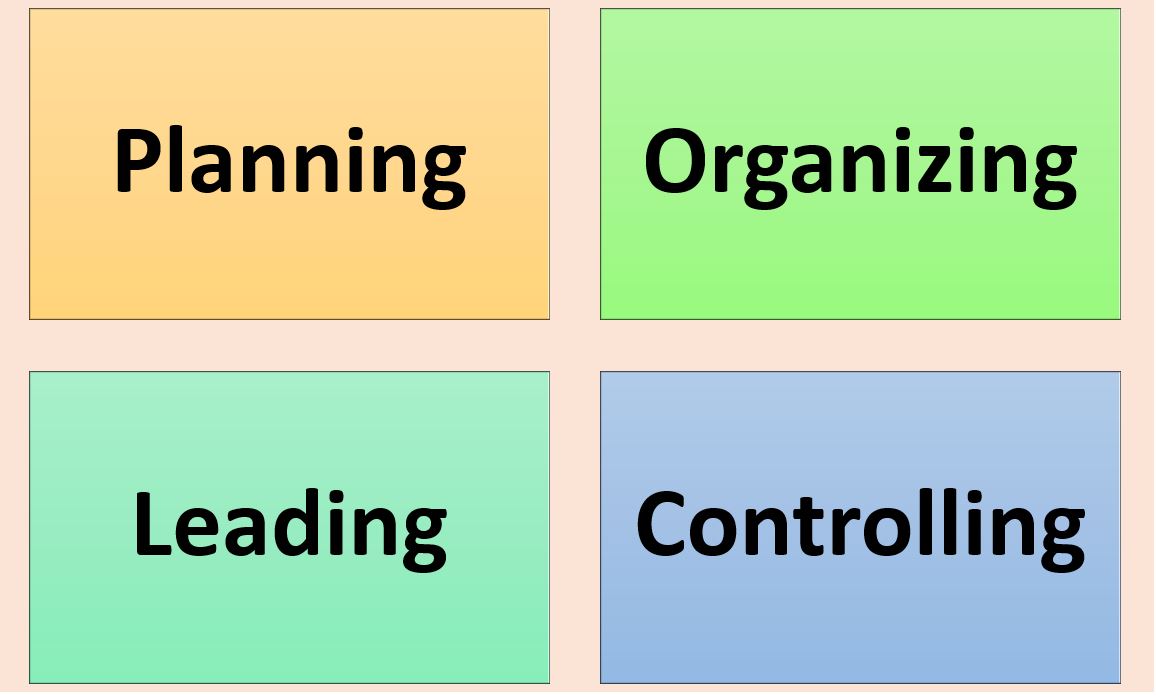
Management of companies and enterprises is a multifaceted process that involves a range of activities aimed at overseeing and directing the operations of a business organization. In order to accomplish the company’s goals and objectives, it entails a variety of functions, such as planning, organizing, leading, and controlling.
Functions of Management of Companies and Enterprises
Each of these functions will be elaborated on in detail and their significance within the context of management will be examined.

-
Planning:
In management, planning is an essential function that consists of setting goals and objectives, identifying how to achieve these objectives, and determining what to do to achieve them. A company’s plan is a roadmap that provides a clear direction and purpose for the company. Several key steps are involved in the planning process:
Defining the company’s mission and vision:
A mission statement offers the company’s purpose and reason for existing, while a vision statement outlines the company’s long-term goals. Both statements help to align employees’ efforts.
Conducting Market Research:
manager’s ability to plan effectively relies on their understanding of market dynamics, consumer preferences, and industry trends. Research ensures they have information about customer needs, competitor analysis, and potential opportunities and threats.
Analyzing Competition:
A company’s competitive advantage comes from understanding and analyzing the strengths and weaknesses of its competitors. Managers analyze strengths and weaknesses of their competitors in order to identify differentiators.
Creating business plans:
Business plans are documents defining strategies, tactics, and strategies that the company will undertake in order to achieve its goals. These documents may include financial projections, marketing plans, operational plans, and risk management strategies.
Setting objectives and goals:
Objectives define the specific targets that the organization wishes to achieve, while goals define the broader outcomes and aspirations. A clear direction and easy evaluation can be provided by SMART (Specific, Measurable, Attainable, Relevant, and Time-bound) objectives and goals.
By planning, managers can anticipate future challenges, capitalize on opportunities, and allocate resources effectively. They can also use it as a point of reference for decision-making, and they are able to evaluate their performance on a regular basis.
-
Organizing:
In order to accomplish company goals, an organization’s resources and activities must be structured and arranged in a way that facilitates their achievement. As part of this function, resources are allocated effectively and an effective organizational structure is designed. Key aspects include:
Organizational structure:
Managers define hierarchies, roles, and responsibilities within the company by establishing organizational structures. Among the most common structures are functional, divisional, matrix, and network structures. A structure should facilitate coordination, communication, and efficiency.
Division of Labor:
The division of tasks among employees ensures that work is assigned effectively and efficiently. Managers determine optimal divisions of labor based on factors such as specialization, skill sets, and workload.
Establishing communication channels:
Effective communication is essential for smooth operations and coordination. In addition to meetings, memos, reports, and digital communication tools, managers create channels for the exchange of information, feedback, and instructions among different levels of the organization.
Allocating resources:
Managers allocate resources like financial capital, human capital, and physical assets to maximize their effectiveness. Using strategic objectives and operational needs as a basis, they evaluate resource requirements, budget, and allocate resources accordingly.
Developing policies and procedures:
Managers learn how to guide employees’ behavior and decisions. By doing so, they assure consistency, promote compliance with legal and ethical standards, and aid in maximizing profitability.
A successful organization promotes collaboration, minimizes duplication of effort, and enhances productivity.
-
Leading:
A leader’s role involves motivating and influencing employees to work towards the company’s goals. Developing a positive work environment, aligning employee efforts, and motivating individuals to do their best is the goal of effective leadership. Key aspects include:
Leading with the company’s vision:
Leaders do this by articulating the company’s vision and communicating it to the employees, creating a shared sense of purpose and aligning individual goals with the company’s objectives.
Setting clear expectations:
Leaders provide a clear and specific understanding of job roles, performance standards, and behavior. A clear expectation helps employees understand their responsibilities and how their performance contributes to the company’s success.
Motivating and inspiring employees:
Leaders use a variety of motivational techniques to boost employee morale and motivate them. In addition to recognition and rewards, employers are encouraged to provide meaningful and challenging work, foster a positive work environment, and provide growth and development opportunities.
Team building:
Leaders are responsible for building cohesive and high-performing teams. These include selecting the right team members, cultivating collaboration, resolving conflicts, and promoting a sense of belonging.
Mentoring and coaching:
Leaders assist employees in developing skills and reaching their full potential. They provide constructive feedback, identify training needs, and offer coaching and mentoring for enhanced performance.
A leader’s ability to motivate employees, promote their engagement and satisfaction, and enhance organizational performance is one of the defining characteristics of effective leadership.
-
Controlling:
The process of controlling involves monitoring and evaluating a company’s performance in order to make sure that it is on track. It involves measuring progress, identifying deviations from plans, and taking corrective actions when necessary. Key aspects of controlling include:
Establishing performance standards:
Managers establish performance standards and metrics that allow them to evaluate the company’s progress, whether financial, operational, or qualitative.
Monitoring performance:
Management continuously measures and monitors the performance of the company against its established benchmarks. This may involve analyzing financial statements, conducting performance reviews, gathering customer feedback, and monitoring key performance indicators (KPIs).
Identifying deviations:
When performance does not meet planned standards, managers investigate why this is happening. It may be necessary to analyze root causes, examine inefficiencies in processes, or investigate external factors that may have contributed to performance problems.
Taking corrective actions:
Once deviations are identified, managers take appropriate corrective actions to realign performance with the desired standards. Plans may need to be revised, resources reallocated, additional training provided, or processes improved as a result.
Evaluating Results:
In order to improve overall performance, managers evaluate the effectiveness of the control measures and corrective actions taken. This feedback loop makes future planning and control processes more effective and efficient. Management uses controlling to ensure that the company stays on track, addresses performance gaps, and adapts to changing market conditions.
As a result, management involves coordinating and integrating various functions in order to achieve organizational goals. As a result of planning, decision-making is guided and optimized, as is the case with organization, which optimizes resource allocation and builds effective structures, as is the case with leading and inspiring employees, and as a result of controlling, performance aligns with the desired standards.
Management that fosters efficiency encourages employee engagement and enhances a company’s ability to adapt and succeed in a dynamic environment promotes efficiency and employee engagement.
Levels of Management of Companies and Enterprises
In the context of the management of enterprises and companies, there are different levels. They are as follows:

-
Top-Level Management:
The top-level management level, also known as executive management or senior management, consists of the highest-ranking executives, such as CEOs, presidents, and board members. It is their responsibility to set the company’s vision, make important strategic decisions, and ensure long-term success.
-
Middle-Level Management:
An organization’s middle management translates the strategic decisions of top management into specific plans and actions, including department heads, managers, and supervisors. Policies are implemented by them, departmental coordination is supervised, and employees and managers at lower levels receive guidance from them.
-
Front-line management:
Managers on the frontline, such as team leaders and supervisors, are directly in charge of employees and day-to-day operations. In addition to implementing plans and strategies formulated by higher-level management, they assign tasks, monitor employees’ performance, and provide regular feedback.
A company’s or enterprise’s management is crucial for optimizing resources, achieving organizational objectives, and creating a positive work environment while adapting to changing business conditions overall.
In order to effectively manage the various aspects of a company, it is necessary to possess technical skills, leadership skills, decision-making abilities, and interpersonal communication skills.
Management of Companies and Enterprises PDF Download

I am Bijisha, an enthusiast with a profound eagerness for learning. I hold a Bachelor’s degree in Business Administration(BBA) from Apex College. I am constantly driven by a relentless curiosity and a genuine desire to expand my knowledge horizons.
- Top 10 Best Books for Hospitality Management - December 9, 2023
- Top 10 Best Sociology Books for Beginners - December 5, 2023
- Top 10 Best Psychology Books on Human Behavior - December 3, 2023


