
Personnel Management and Industrial Relations – Functions, Interrelationship and Challenges | HRM
Personnel Management and Industrial Relations
An organization’s personnel management and industrial relations practice plays a key role in managing human resources within its organization. Both disciplines are concerned with establishing and maintaining productive and harmonious work environments.
Personnel Management
An organization’s workforce is managed by personnel management, also called human resource management (HRM). The aim of personnel management is to maximize employee performance and the effectiveness of the organization as a whole.
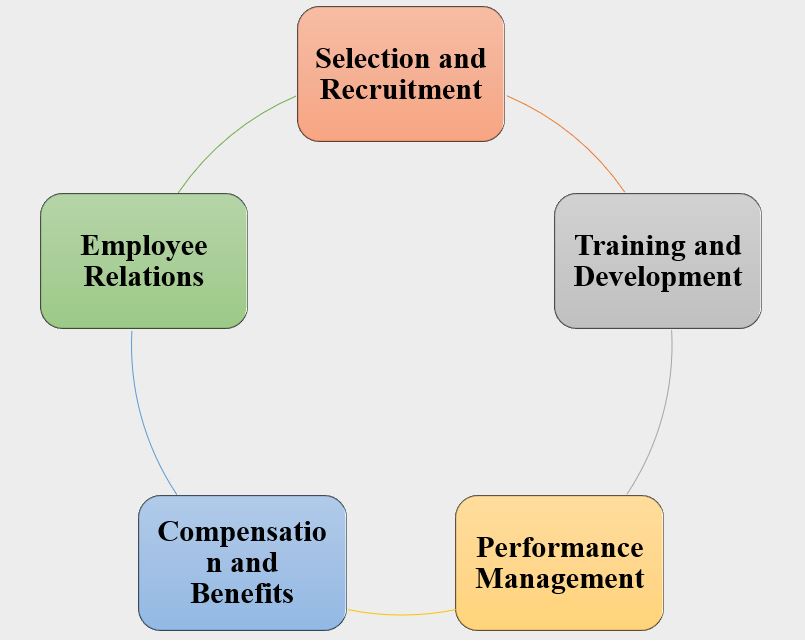
Some of the key functions of personnel management are as follows:

-
Selection and Recruitment:
Personnel management involves identifying job requirements, attracting prospective candidates, assessing their qualifications, and making appropriate hiring decisions.
This involves identifying job requirements, attracting potential candidates, evaluating their qualifications, and making appropriate hiring decisions. A competent and diverse workforce is built through effective recruitment and selection.
-
Training and Development:
Training and development programs aim to improve the skills, knowledge, and abilities of employees. On-the-job training, workshops, seminars, and e-learning platforms can all be used for these initiatives. Investing in employee development contributes to organizational growth, satisfaction, and productivity.
-
Performance Management:
Performance management involves setting clear performance objectives, giving regular feedback, conducting performance appraisals, and rewarding high performers.
As a result of this process, individual and organizational goals are aligned, improvements are identified, and top performers are recognized and retained.
-
Compensation and Benefits:
It is vital to attract and retain talented employees by offering a fair and competitive compensation package, including salary, bonuses, and benefits.
By aligning compensation with industry standards, promoting internal equity, and motivating employees to perform at their best, personnel management ensures that compensation is aligned with industry standards.
-
Employee Relations:
A harmonious work environment depends on the maintenance of positive employee relations. To minimize conflicts and promote a cooperative atmosphere, personnel management focuses on building effective communication channels, handling grievances, and addressing disciplinary issues.
Industrial Relations
In industrial relations, employers and employees learn about and manage their relationship, both individually and collectively. It consists of various aspects of labor-management interactions, including:

-
Collective Bargaining:
A collective bargaining process is an agreement between employees (usually the trade unions) and management that establishes employment terms and conditions. An effective collective bargaining process ensures a fair and balanced agreement between employers and employees concerning wages, working hours, and benefits.
-
Occupational Laws and Regulations:
There are a variety of labor laws and regulations governing employment practices that affect industrial relations. As part of these laws, workers are protected from unfair labor practices, minimum wages are guaranteed, working conditions are guaranteed, and occupational health and safety are protected.
Maintaining a legal and ethical work environment depends on compliance with labor legislation.
-
Grievance Handling and Dispute Resolution:
Conflicts, disputes, and grievances in the workplace must be addressed and resolved by industrial relations professionals. It is their responsibility to act as a mediator between management and employees, ensuring that concerns are addressed, investigated, and resolved efficiently and fairly.
As a result of effective dispute resolution mechanisms, trust and cooperation are fostered.
-
Employee Participation and Representation:
It is essential that industrial relations promote employee participation and representation in decision-making processes. By involving employees in decision-making, you can create a sense of ownership and increase job satisfaction.
Including employees in decision-making can be accomplished through joint consultative committees, work councils, or employee representation on company boards.
-
Workplace Health and Safety:
Industrial relations also encompass ensuring an environment that is safe and healthy. In order to protect employees from occupational hazards, employers have a legal and moral obligation to provide adequate safety measures, training, and resources. Organizational reputation, employee productivity, and well-being are impacted by effective health and safety practices.
Interrelationship and Challenges
Both personnel management and industrial relations aim to enhance organizational performance, safeguard employee welfare, and enhance working conditions. However, they also face a variety of challenges. Some of them are as follows:

-
Balancing Individual and Collective Interest:
The balance between individual and collective interests is the focus of personnel management, while industrial relations focuses on collective interests. It can be challenging to strike a balance between individual and collective concerns, which requires effective communication and collaboration between HR professionals, management, and employees.
-
Managing Change and Adaptation:
Companies must adapt to technological advances, market dynamics, and shifting employee expectations in today’s rapidly evolving business environment. While taking into account the impact of organizational change and managing potential resistance, human resources and industrial relations must facilitate smooth organizational change processes.
-
Dealing with Conflicts and Disputes:
There are many reasons for conflicts and disputes in the workplace, including differences in expectations, poor communication, and perceived unfair treatment. Managing personnel and maintaining a positive work environment requires strong conflict resolution skills for professionals in industrial relations and personnel management.
-
Legal and Regulatory Frameworks:
It is important that personnel management and industrial relations stay current with changing labor laws, regulations, and compliance requirements. To avoid legal consequences, protect employee rights, and maintain ethical practices, it is crucial to follow legal frameworks.
Strategies and Best Practices
The following strategies and best practices can be adopted by organizations to address the challenges faced by personnel management and industrial relations:

-
Collaboration and Communication:
Employee collaboration and communication should be promoted between management, HR professionals, and employees. Regular dialogue, feedback mechanisms, and employee involvement in decision-making should be encouraged.
-
Continuous Learning and Development:
It’s important to invest in continuous learning and development programs so that employees grow in skills, knowledge, and adaptability. This will allow your organization to meet the changing needs of the business.
-
Proactive Conflict Resolution:
The most effective method of resolving conflicts is be proactive. Develop effective mechanisms such as mediation or arbitration to handle conflicts promptly and fairly. Promote a culture of respect, tolerance, and constructive feedback to reduce the likelihood that disputes will arise in the future.
-
Focus on Work-Life Balance:
Encourage employee well-being and flexibility, and enable employee-friendly practices, such as flexible working hours, remote work options, and wellness programs.
-
Compliance and Ethical Practices:
Establish a culture of fairness and integrity based on the principles of compliance and ethical practice. Ensure strict adherence to labor laws, regulations, and ethical standards.
In order to manage human resources effectively and maintain positive employer-employee relationships, personnel management and industrial relations are critical disciplines.
A productive and harmonious work environment can be created through recruiting, training, performance management, employee relations, collective bargaining, compliance, and dispute resolution. Collaboration, proactive behavior, and ethical behavior enable organizations to overcome challenges and succeed over the long run.
Personnel Management and Industrial Relations PDF Notes Download

I am Bijisha, an enthusiast with a profound eagerness for learning. I hold a Bachelor’s degree in Business Administration(BBA) from Apex College. I am constantly driven by a relentless curiosity and a genuine desire to expand my knowledge horizons.
- Top 10 Best Books for Hospitality Management - December 9, 2023
- Top 10 Best Sociology Books for Beginners - December 5, 2023
- Top 10 Best Psychology Books on Human Behavior - December 3, 2023


