
Managing Part-time, Full-time, and Freelance Employees | Human Resource Management (HRM)
Managing Part-time, Full-time, and Freelance Employees
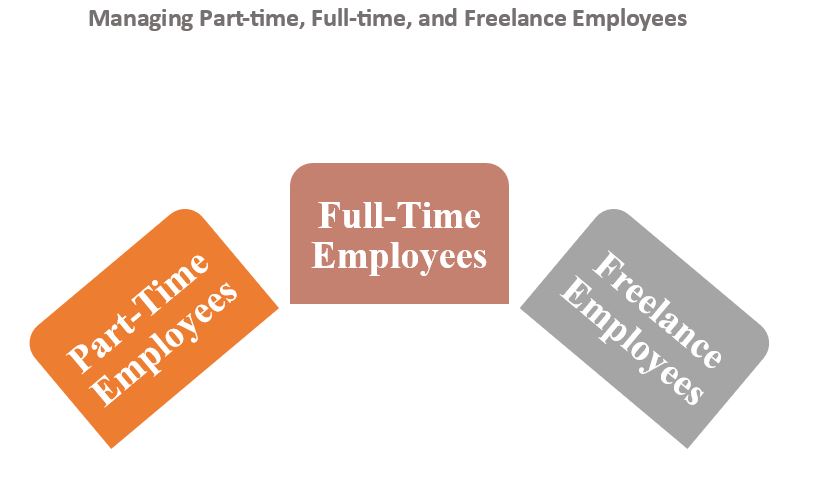
Part-time, full-time, and freelance employees all require careful management, communication, and coordination. Managing each type of employment arrangement presents unique challenges and considerations. Here’s a detailed description of how to manage them effectively:
1. Part Time Employees:
Employees who work part-time typically work fewer hours than full-timers, often on a fixed schedule. There are some key aspects to consider when managing part-timers:
i. Clear Communication:
Part-time employees should receive detailed information regarding their schedules, pay rates, and responsibilities. Ensure that they receive a written agreement outlining their working hours and responsibilities.
ii. Scheduling:
Establish a clear and consistent schedule for part-time employees to allow them to plan their personal lives and ensure adequate coverage during business hours.
iii. Task Assignment:
Ensure tasks assigned can be completed within the designated working hours. Ensure the workload is manageable and aligned with their capabilities and skills.
iv. Flexibility:
It is important to respect the needs of part-time employees and be open to discussing flexible working arrangements that can accommodate their needs, as long as they don’t adversely affect business performance.
v. Inclusion and Engagement:
Incorporate part-timers into team meetings, training sessions, and company-wide communications, encouraging their involvement and participation.
vi. Fair Compensation:
A fair compensation policy ensures that part-time employees are compensated fairly based on their contributions, as required by labor laws. Pay rates should be reviewed regularly so that transparency and equity can be ensured.
2. Full Time Employees:
The full-time employee usually works the same number of hours each week and is considered one of the most important members of the workforce. Here are some tips to manage them effectively:
i. Clear Job Descriptions:
Defining full-time employees’ roles and responsibilities is essential. Include a job description that describes their duties, goals, and expectations.
ii. Performance Management:
Communicate clear performance goals to full-time employees, evaluate performance and provide constructive feedback. Promote growth and development opportunities for your employees.
iii. Work-life Balance:
A positive work-life balance can be achieved by offering reasonable work hours, encouraging vacation usage, and respecting personal boundaries. Employee well-being initiatives can be implemented to ensure a healthy and productive workplace.
iv. Collaboration and Teamwork:
Create a collaborative work culture among full-time employees through teamwork, knowledge sharing, and cross-functional collaboration that enhances productivity and creates a positive work environment.
v. Employee Benefits:
A comprehensive benefits package for employees should include health insurance, retirement plans, paid time off, and other benefits, as well as regular communication of these benefits to full-time employees. Ensuring full-time employees understand and take advantage of these benefits is also imperative.
vi. Career Development:
Provide training programs, mentorship, and promotion paths to enhance the skills and job satisfaction of full-time employees.
3. Freelance Employees:
Employees who are freelancers work on a project or contract basis, usually for a specific period of time. Freelancer management requires a slightly different approach:
i. Clear Contract Agreements:
The scope of work, deadlines, deliverables, payment terms, and any other relevant terms and conditions must be clearly defined in the contract.
ii. Effective Communication:
Maintain open communication channels with freelance employees where project requirements are clearly communicated, feedback is provided promptly, and any questions or concerns are addressed as soon as possible.
iii. Project Management:
Define clear milestones and deadlines for each project and track progress regularly. Provide freelancers with the necessary support and resources.
iv. Invoice and Payment:
Optimize the process of invoicing and payment for freelancers. Clearly communicate payment terms and ensure timely payment to maintain a positive working relationship.
v. Relationship Building:
It is important to build relationships with freelancers, even though they are not permanent employees. Treat freelancers with respect, provide feedback, and consider rehiring them for future projects if they meet your expectations.
vi. Legal Compliance:
Make sure your company adheres to labor regulations and laws when engaging freelance employees. Familiarize yourself with independent contractor laws to avoid potential legal repercussions.
It is imperative to understand the unique needs and characteristics of part-time, full-time, and freelance employees when managing them. To manage a diverse workforce successfully, you need effective communication, clear expectations, fair treatment, and ongoing support.
Related Posts
- Sensitivity Training for Employees – Concept, History, Goals , Benefits, Drawbacks & Examples | Human Resource Management (HRM)
- Employees are likely to see an adaptive change as __________.

I am Bijisha, an enthusiast with a profound eagerness for learning. I hold a Bachelor’s degree in Business Administration(BBA) from Apex College. I am constantly driven by a relentless curiosity and a genuine desire to expand my knowledge horizons.
- Top 10 Best Books for Hospitality Management - December 9, 2023
- Top 10 Best Sociology Books for Beginners - December 5, 2023
- Top 10 Best Psychology Books on Human Behavior - December 3, 2023


