
Why a flexible workplace is essential in a Modern Organization? | Human Resource Management (HRM)
Why a flexible workplace is essential in a Modern Organization?
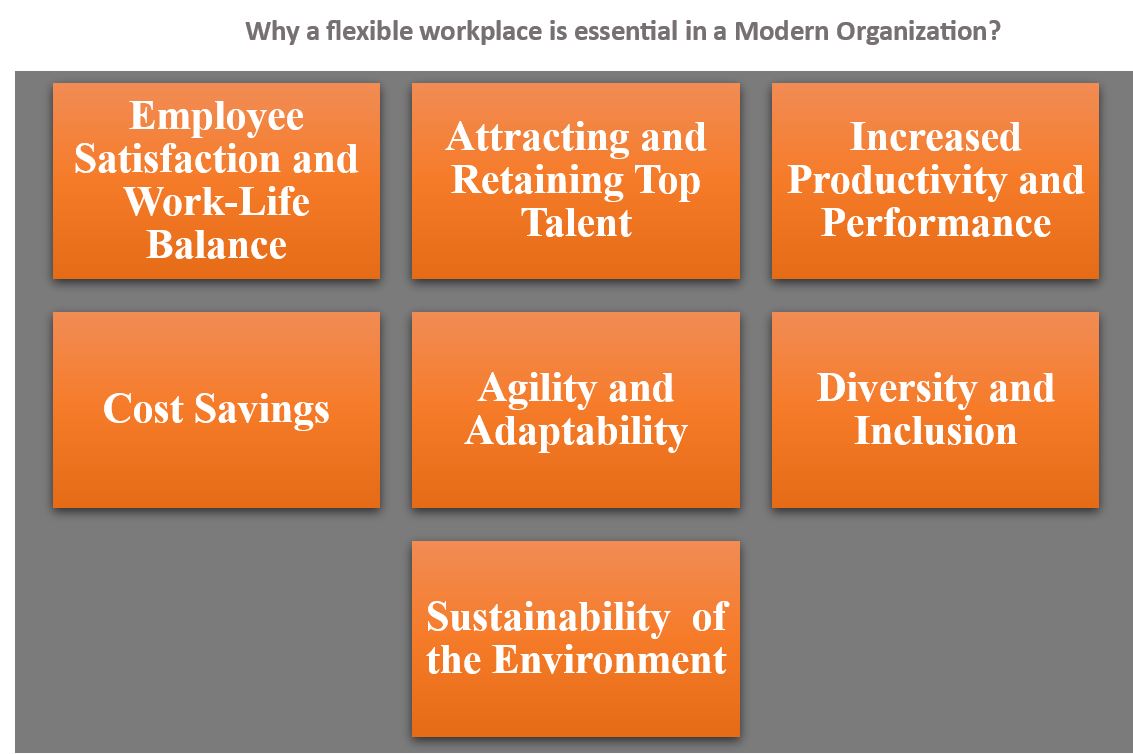
Modern organizations need flexible workplaces for a variety of reasons. In a rapidly changing business landscape, organizations must adapt in order to retain and attract top talent, foster employee satisfaction and productivity, and remain competitive. The following are some of the key reasons why having a flexible workplace is so important:
i. Employee Satisfaction and Work-life Balance:
An employee can choose when, where, and how long they work. By doing so, they can better balance their personal and professional lives, resulting in less stress and greater job satisfaction. Personal commitments, such as family duties or hobbies, can be attended to without sacrificing work commitments. A high level of employee satisfaction leads to a higher level of employee engagement, loyalty, and morale.
ii. Attracting and Retaining Top Talent:
It is crucial for employers to offer flexible work options to attract and retain top talent. Job seekers prioritize flexibility when considering potential employers. It is possible to reach a wider pool of talent by offering flexible arrangements, such as remote work or flexible hours, for various reasons, such as geographical limitations or caregiving responsibilities, which may prevent them from committing to traditional work structures.
iii. Increased Productivity and Performance:
A flexible workplace has been linked to higher productivity and performance. Employees are more motivated and focused when they are able to work in environments that suit their individual preferences. The flexibility of work arrangements can also help employees avoid long commutes, reduce distractions, and create optimal conditions for deep work, which results in better output and efficiency.
iv. Cost Savings:
Employees and organizations can save money with flexible work arrangements. Remote work eliminates commuting costs, reduces wardrobe costs, and can even save on childcare costs. In addition to reducing overhead costs, organizations can also benefit from working remotely or using shared workspaces, reducing overhead costs like office space and utilities. Startups and small businesses with limited resources may benefit most from this.
v. Agility and Adaptability:
Flexible workplaces promote organizational agility and adaptability in a rapidly changing environment. Organizations need to be able respond quickly to new technologies and market dynamics to stay competitive. An organization’s flexible work arrangements allow them to adapt to changes in customer demands or unexpected disruptions like natural disasters or public health emergencies, as well as scale up or down their workforce more easily.
vi. Diversity and Inclusion:
The workplace can be more inclusive and diverse if employees are more flexible. Organizations can attract and retain employees from diverse backgrounds by accommodating different work styles, preferences, and needs, including individuals with disabilities, working parents, and people from different cultures and generations. Diverse perspectives foster creativity and innovation, resulting in better problem-solving and decision-making.
vii. Sustainability of the Environment:
Flexible work arrangements can reduce the carbon footprint associated with commuting and traditional office spaces, contributing to a more sustainable future. The transportation-related emissions of employees who work remotely are significantly reduced. It is also possible for organizations to adopt policies that encourage virtual meetings and reduce unnecessary travel, thereby further reducing their environmental impact.
As a result, a flexible workplace is crucial for a modern organization because it promotes employee happiness, work-life balance, and productivity. Organizations are able to adapt to changing demands, attract and retain top talent, and promote diversity, inclusion, and sustainability through it. The benefits of embracing flexibility include a more engaged, productive, and resilient workforce, ultimately leading to long-term success for organizations.
Related Posts

I am Bijisha, an enthusiast with a profound eagerness for learning. I hold a Bachelor’s degree in Business Administration(BBA) from Apex College. I am constantly driven by a relentless curiosity and a genuine desire to expand my knowledge horizons.
- Top 10 Best Books for Hospitality Management - December 9, 2023
- Top 10 Best Sociology Books for Beginners - December 5, 2023
- Top 10 Best Psychology Books on Human Behavior - December 3, 2023


