
Onboarding Vs. Orientation: Key Differences, Benefits, Process & Best Practices | Human Resource Management (HRM)
A new employee’s first few weeks at a company can shape how long they stay and how well they perform. Two terms often used interchangeably during this period are onboarding and orientation. They are related, but they are not the same thing. Here is a clear breakdown of both.
What Is Orientation?
Orientation is a short, structured introduction to a new job, usually completed within the first day or two of employment. It covers the basics a new hire needs to get started, such as filling out paperwork, learning company policies, getting an ID badge or login credentials, and meeting the immediate team.
Orientation is a single event, not an ongoing process. It answers questions like where to sit, who to report to, and what the company’s basic rules are.
What Is Onboarding?
Onboarding is a longer, more comprehensive process that helps a new employee become fully productive and integrated into the company. It can last anywhere from a few weeks to several months, depending on the role and the organization. Onboarding includes orientation as one of its early steps, but it goes much further.
Onboarding typically covers:
- Understanding the company’s mission, values, and culture
- Learning specific job responsibilities and expectations
- Building relationships with coworkers and managers
- Setting early performance goals
- Ongoing check ins and feedback during the first several months
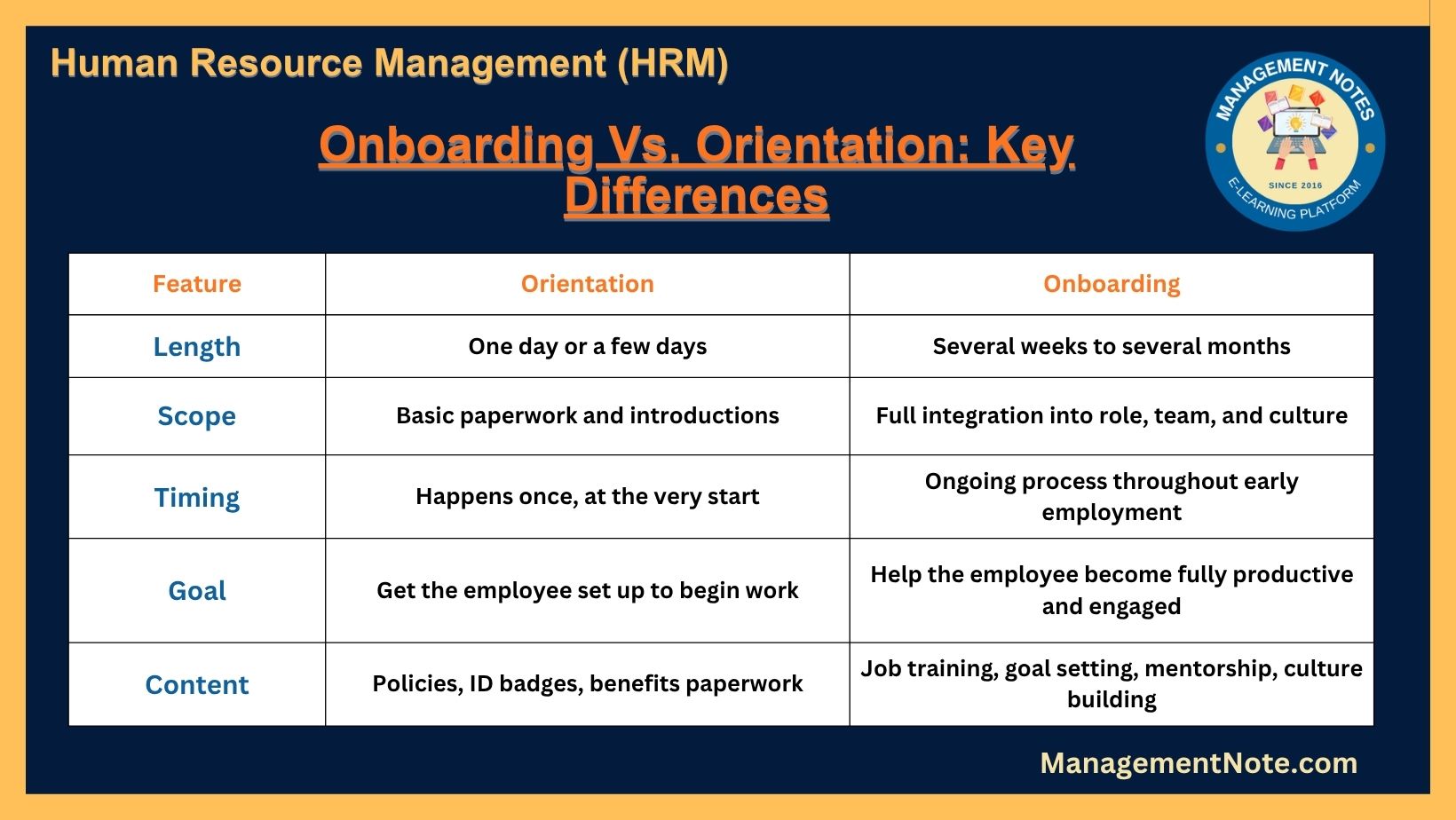
Onboarding Vs. Orientation: Key Differences
| Feature | Orientation | Onboarding |
|---|---|---|
| Length | One day or a few days | Several weeks to several months |
| Scope | Basic paperwork and introductions | Full integration into role, team, and culture |
| Timing | Happens once, at the very start | Ongoing process throughout early employment |
| Goal | Get the employee set up to begin work | Help the employee become fully productive and engaged |
| Content | Policies, ID badges, benefits paperwork | Job training, goal setting, mentorship, culture building |
Why the Difference Matters
Companies that treat onboarding as if it were just orientation often see new hires struggle in their first few months. A one day introduction does not teach someone how to succeed in their specific role, understand team dynamics, or feel connected to the company’s culture.
Strong onboarding programs are linked to better employee retention, since new hires who feel supported and prepared are less likely to leave early.
Real Life Example
A new customer service representative joins a company on a Monday. On day one, she completes orientation. She fills out tax forms, receives her employee handbook, gets her computer login, and meets her direct supervisor. This takes about half a day.
Over the following three months, she goes through onboarding. She shadows experienced team members, attends product training sessions, receives weekly check ins with her manager, and gradually takes on full responsibilities as her confidence grows.
By the end of her onboarding period, she is fully independent in her role and understands not just her tasks, but how her work fits into the larger company goals.
Onboarding Vs. Orientation FAQs
Is orientation part of onboarding?
Yes. Orientation is usually the first step within a larger onboarding process. Onboarding continues well after orientation ends.
How long should onboarding last?
There is no single rule, but many companies design onboarding programs that run anywhere from thirty days to ninety days, and some extend support through the employee’s first full year.
Can a company skip orientation and go straight to onboarding?
Not really. Orientation covers essential first day tasks like paperwork and system access, which need to happen before deeper onboarding activities like training and goal setting can begin.
Does better onboarding actually improve retention?
Yes. Employees who go through a structured onboarding process tend to feel more prepared and connected to the company, which is linked to lower turnover in the first year of employment.
Key Takeaways
Orientation is a short, one time introduction that covers the basics of starting a new job. Onboarding is a longer process that helps a new employee become fully integrated, trained, and productive over time. Orientation is simply the first stage of a much larger onboarding journey, and companies that invest in both tend to see stronger employee performance and retention.
You May Also Like:
- Moonlighting Vs Freelancing: Meaning, Differences & Risks Explained | Human Resource Management (HRM)
- Employee Retention Vs. Employee Engagement: Key Differences Explained | Human Resource Management

MBA- Finance Specialization
I am Smirti Bam, an enthusiastic edu blogger with a passion for sharing insights into the dynamic world of business and management through this website.
I hold a MBA degree from Presidential Business School, Kathmandu, and a BBA degree with a specialization in Finance from Apex College,
- Onboarding Vs. Orientation: Key Differences, Benefits, Process & Best Practices | Human Resource Management (HRM) - September 24, 2026
- Moonlighting Vs Freelancing: Meaning, Differences & Risks Explained | Human Resource Management (HRM) - September 14, 2026
- Employee Retention Vs. Employee Engagement: Key Differences Explained | Human Resource Management - September 6, 2026


