
Communication Planning – Concept, Key Elements, Importance, Process, Examples, MCQs | Management Notes
Communication Planning
A communication plan is a strategic process in which a comprehensive strategy is developed to effectively communicate with a specific target audience. A communication strategy entails defining communication goals, crafting key messages, selecting appropriate communication channels, and setting a timeline for implementation.
Communication planning is a process by which information is communicated in an impactful and deliberate way, reaching the intended recipients and achieving desired outcomes. In organizations or projects, it is a proactive approach to managing and coordinating communication efforts.
Key Elements in Communication Planning
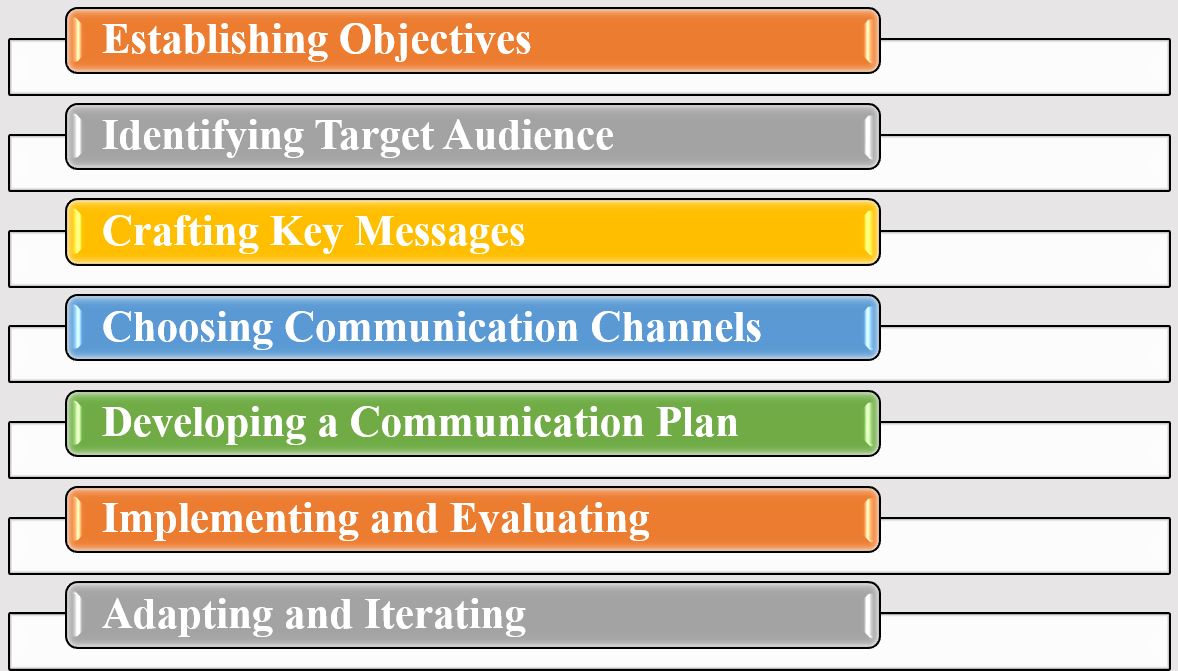
The following key elements are involved in communication planning:

Establishing Objectives:
Determining the communication objectives is the first step. The objectives outline what the communication efforts are intended to achieve. An objective could be to raise awareness, promote a product or service, influence opinions, build relationships, or promote specific actions.
Identifying Target Audience:
In order to plan effectively for communication, it is essential to understand the target audience or stakeholders. By identifying the audience, you can tailor messages to resonate with their needs, desires, and preferences. Identifying the audience allows you to tailor messages to match their interests and motivations.
Crafting Key Messages:
It is essential to develop key messages for effective communication of information. Key messages are concise, focused statements that summarize the main ideas and benefits of a product or service. It is important that they are tailored to meet the needs and interests of the target audience, align with organizational values, and support communication goals.
Choosing Communication Channels:
For effective communication, you must choose both traditional and digital channels according to the audience’s preferences and habits. These channels can include print media, websites, social media platforms, email newsletters, public speaking engagements, or face-to-face interactions.
Developing a Communication Plan:
For organizing and coordinating communication activities, a comprehensive communication plan is essential. Communication strategies include details about messaging, channel selection, budget allocation, resource allocation, and evaluation metrics. The plans outline the specific actions, responsibilities, and timelines for implementing them.
Implementing and Evaluating:
Implementing the communication plan involves implementing the strategies and tactics identified. Messages are disseminated through the chosen channels, and progress is monitored and evaluated against the defined objectives. Based on feedback and performance metrics, regular evaluations allow for adjustments and improvements.
Adapting and Iterating:
Communication planning involves iterative revisions. In order to maximize effectiveness, communication activities must be monitored, evaluated, and adjusted continuously. Feedback and data from ongoing communication activities are used to refine future messaging, channels, and strategies.
An organization or project can improve its ability to reach its intended audience, communicate effectively, and achieve desired outcomes by engaging in communication planning. By aligning communication efforts with organizational goals, it maximizes their impact.
Importance of Communication Planning
The importance of communication planning for organizations and projects can be attributed to several factors. Some of its importance are as follows:

Consistency and Clarity:
Communication planning ensures messages are clear, consistent, and aligned with organizational objectives. Communicating with stakeholders with consistency enhances credibility and builds trust. By defining key messages and objectives in advance, communication efforts can avoid confusion and convey a unified voice.
Audience Understanding:
An effective communication plan involves identifying and understanding the target audience’s characteristics, needs, and preferences. It is by using this understanding that messages can be tailored and the appropriate communication channels selected that resonate with the audience can be selected.
Communication planning increases engagement and positive responses by delivering messages that are relevant and meaningful to the audience.
Resource Allocation:
Planning allows organizations to allocate their resources efficiently. By identifying the most effective communication channels and strategies, they can focus their efforts and resources on those channels that will have the greatest impact. Ineffective or unnecessary communication activities are prevented as a result of this.
Strategic Approach:
Communication planning focuses on communicating effectively. Communication activities contribute to the achievement of organizational objectives by aligning communication goals with organizational objectives. Communication can be effectively leveraged to support organizational success if organizations integrate communication into the strategic planning process.
Crisis Management:
Communication planning is essential during times of crisis. When organizations have a predetermined communication plan, they can respond quickly and effectively, reducing confusion and preventing misinformation, while minimizing confusion and misinterpretation. In order to ensure a coordinated and timely response to crises, the plan outlines the processes and channels for crisis communication.
Stakeholder Engagement:
An effective communication plan can help organizations build and maintain positive relationships with stakeholders. Organizations can create open dialogue and collaboration by tailoring their messages and engagement strategies according to the needs and preferences of different stakeholders. Through effective and clear communication, stakeholders are more likely to trust, support, and be loyal to them.
Message Effectiveness:
Communication planning ensures messages are tailored to target audiences and are strategically crafted. Organizations can increase the probability of understanding, retaining, and acting on messages by developing key messages in advance. In this way, messages are more likely to be understood, retained, and acted upon by their intended recipients.
Measurement and Evaluation:
The communication planning process establishes metrics and evaluation mechanisms to assess the effectiveness of communications. Organizations can optimize future communication strategies based on data-driven decisions by monitoring and analyzing communication activities, identifying areas for improvement, and optimizing messages and channels.
Generally, communication planning maximizes the chances of communicating messages, engaging stakeholders, achieving objectives, and enhancing organizational reputation by providing a structured and strategic approach to communication efforts. Communication must be purposeful, targeted, and aligned with the organization’s goals and values in order to be effective.
Process of Communication Planning
Communication planning involves several steps that help organizations develop effective communication strategies. Here are the steps in detail:

Identify Communication Goals:
Begin by clearly defining your communication goals. These goals must align with the overall objectives of your organization or project. There are many types of communication goals, including raising awareness, marketing a product or service, enhancing stakeholder engagement, managing crisis, or improving internal communication.
Define the Target Audience:
Determine who you are trying to reach out to. By analyzing demographics, psychographics, and any other relevant information, you will gain a deeper understanding of your target audience. The message will be shaped based on this understanding, which will help you choose the most effective communication channels.
Conduct a Situation Analysis:
Analyze the organization’s communication practices, strengths, weaknesses, opportunities, and threats by analyzing the current communication landscape. As part of this analysis, stakeholders can be surveyed, interviewed, and market research or competitor analysis can be conducted. By analyzing the situation, you can identify gaps and improve.
Establish Key Messages:
Create key messages that align with your communication goals and resonate with your target audience. In order to convey your main points, you need to be clear, concise, and tailored to your audience’s interests and needs. All communication activities should be based on these messages, which should be consistent across all channels.
Select Communication Channels:
Select the most effective communication channels to deliver your message to the target audience. You may want to consider using traditional and digital channels, such as websites, social media, email newsletters, print media, public speaking, or face-to-face meetings. Choose channels that will effectively reach and engage your target audience based on their preferences, habits, and accessibility.
Develop a Communication Plan:
Develop a comprehensive communication plan that outlines the specific actions, strategies, and tactics necessary to implement the communication strategy. Communication activities should be planned according to a timeline, responsibilities, and resources. Communication plans serve as roadmaps for the effective execution of the strategy, as well as addressing potential risks, contingencies, and budget constraints.
Content development:
Develop content aligned with the key messages and tailored to each communication channel selected. Content can include written materials, visuals, videos, or interactive elements. Make sure that your content is engaging, informative, and resonates with your target audience by adapting it to fit each channel’s format and requirements, while maintaining consistency across all platforms.
Monitor and implement:
Follow the communication plan according to the timeline, implement strategies, and closely monitor each activity’s progress. Monitor metrics like audience reaches, engagement levels, feedback, and response rates regularly to determine how effective your communication efforts are. As needed, adjust and improve based on these metrics.
Evaluate and Adjust:
Determine whether the communication strategy is effective against the defined goals. Assess the impact of messages, channels, and activities on the target audience and desired outcomes. Analyze feedback you receive and identify areas where improvements can be made. Refine future communication strategies based on these insights and adjust the ongoing plan accordingly.
In order to ensure the effectiveness of communication efforts, the communication planning process requires continuous evaluation, learning, and adaptation. In order to achieve their communication goals and foster positive relationships with stakeholders, it aligns messages, channels, and activities.
Real Examples Related to Communication Planning
The following real-world examples demonstrate the value of communication planning:
Coca-Cola’s “Share a Coke” Campaign:
Coca-Cola launched a campaign where personal names were printed on Coke bottles as part of its “Share a Coke” campaign. As part of the communication planning, we identified the target audience (mostly young consumers), created messages that emphasized personalization and sharing, and selected communication channels such as television commercials, social media, and in-store displays.
By engaging consumers, generating buzz on social media, and increasing sales, the campaign was successful.
Airbnb’s Crisis Communication:
Airbnb faced a significant crisis in 2020 when the COVID-19 pandemic caused travel restrictions and cancellations. As part of the communication planning process, a crisis communication plan was developed that addressed customer concerns, provided accurate information about cancellations and refunds, and ensured the safety of guests and hosts.
During a challenging time, Airbnb used email communication, website updates, and social media to keep stakeholders informed and maintain trust.
Dove’s Real Beauty Campaign:
In the Dove Real Beauty campaign, conventional beauty standards were challenged and body positivity was promoted. Communication planning included identifying the target audience, crafting key messages centered around self-acceptance and redefining beauty, and choosing communication channels such as television commercials, print ads, and social media posts.
With the campaign, Dove positioned itself as a brand that championed inclusivity and empowerment, and sparked conversations among audiences.
NASA’s Mars Rover Landing:
NASA’s communication planning for the Mars Rover landing involved a multifaceted approach to engage and educate the public. There were live broadcasts, press conferences, social media updates, and interactive websites. Through this communication plan, NASA generated widespread excitement and support for its endeavors by providing real-time updates to the public, as well as demonstrating the mission’s significance.
Starbucks Internal Communication:
The Starbucks Internal Communication Plan aimed at fostering employee engagement and alignment through regular company meetings, internal newsletters, digital communication platforms, and training programs. In this program, employees were kept informed about company developments, recognized for their contributions, and provided with opportunities for feedback.
Employee satisfaction, productivity, and loyalty were enhanced as a result of this communication planning approach.
As these real-life examples demonstrate, effective communication planning is key to meeting specific objectives, engaging target audiences, managing crises, and promoting brand values.
MCQs related to Communication Planning
Some of the MCQs related to Communication Planning are as follows:
What is the first step in the communication planning process?
- a) Identifying the target audience
- b) Crafting key messages
- c) Setting communication goals
- d) Selecting communication channels
Answer: c) Setting communication goals
Which of the following is NOT a key element of communication planning?
- a) Identifying the target audience
- b) Developing key messages
- c) Allocating resources
- d) Conducting a situation analysis
Answer: c) Allocating resources
In communication planning, key messages should be:
- a) Lengthy and detailed
- b) Consistent across different channels
- c) Generic and applicable to any audience
- d) Complex and technical
Answer: b) Consistent across different channels
What is the purpose of conducting a situation analysis in communication planning?
- a) To identify the target audience
- b) To develop key messages
- c) To allocate resources
- d) To assess the organization’s current communication practices
Answer: d) To assess the organization’s current communication practices
Which of the following is an example of a communication channel?
- a) Setting communication goals
- b) Crafting key messages
- c) Social media platforms
- d) Identifying the target audience
Answer: c) Social media platforms
What are the 5 steps in communication planning?
The five steps in communication planning are as follows:
- Identify goals
- Define target audience
- Craft key messages
- Select communication channels
- Develop an implementation plan
What are key messages in a communication plan?
A communication plan contains key messages that are your target audience’s primary points or core ideas. By aligning with your communication goals, key messages ensure consistency and clarity in your communication efforts.
They should be concise, focused, and aligned with your communication goals. They should encapsulate the most important information or call to action you want your audience to remember and take action on.
A message should be tailored to resonate with the audience based on their needs, interests, and motivations. In order to engage your audience effectively, key messages guide all communication activities and ensure a cohesive and impactful approach.
How do you write a communication management plan?
Establish the purpose and scope of the communication management plan before writing it. Determine specific communication objectives and goals of stakeholders involved in the project. Identify stakeholders involved in the project. Create key messages that are aligned with the goals and resonate with the audience.
Decide on the appropriate communication channels and tools. Assign team members’ responsibilities and establish a communication schedule.
Identify feedback mechanisms and monitoring and evaluation processes. Develop a contingency plan for potential challenges. Regularly review and update the plan to ensure alignment with the project’s objectives.

I am Bijisha, an enthusiast with a profound eagerness for learning. I hold a Bachelor’s degree in Business Administration(BBA) from Apex College. I am constantly driven by a relentless curiosity and a genuine desire to expand my knowledge horizons.
- Top 10 Best Books for Hospitality Management - December 9, 2023
- Top 10 Best Sociology Books for Beginners - December 5, 2023
- Top 10 Best Psychology Books on Human Behavior - December 3, 2023


