
Headhunting Explained: Process, Cost, Pros & Cons (2026) | Human Resource Management
Finding the right leader can make or break a company. That is why many businesses do not just post a job ad and wait. They use headhunting, also called executive search, to go out and find top talent that is not even looking for a new job.
This guide explains what headhunting is, how the process works, its pros and cons, and how it is different from normal hiring. We will also look at real examples and answer common questions people search for online.
What Is Headhunting?
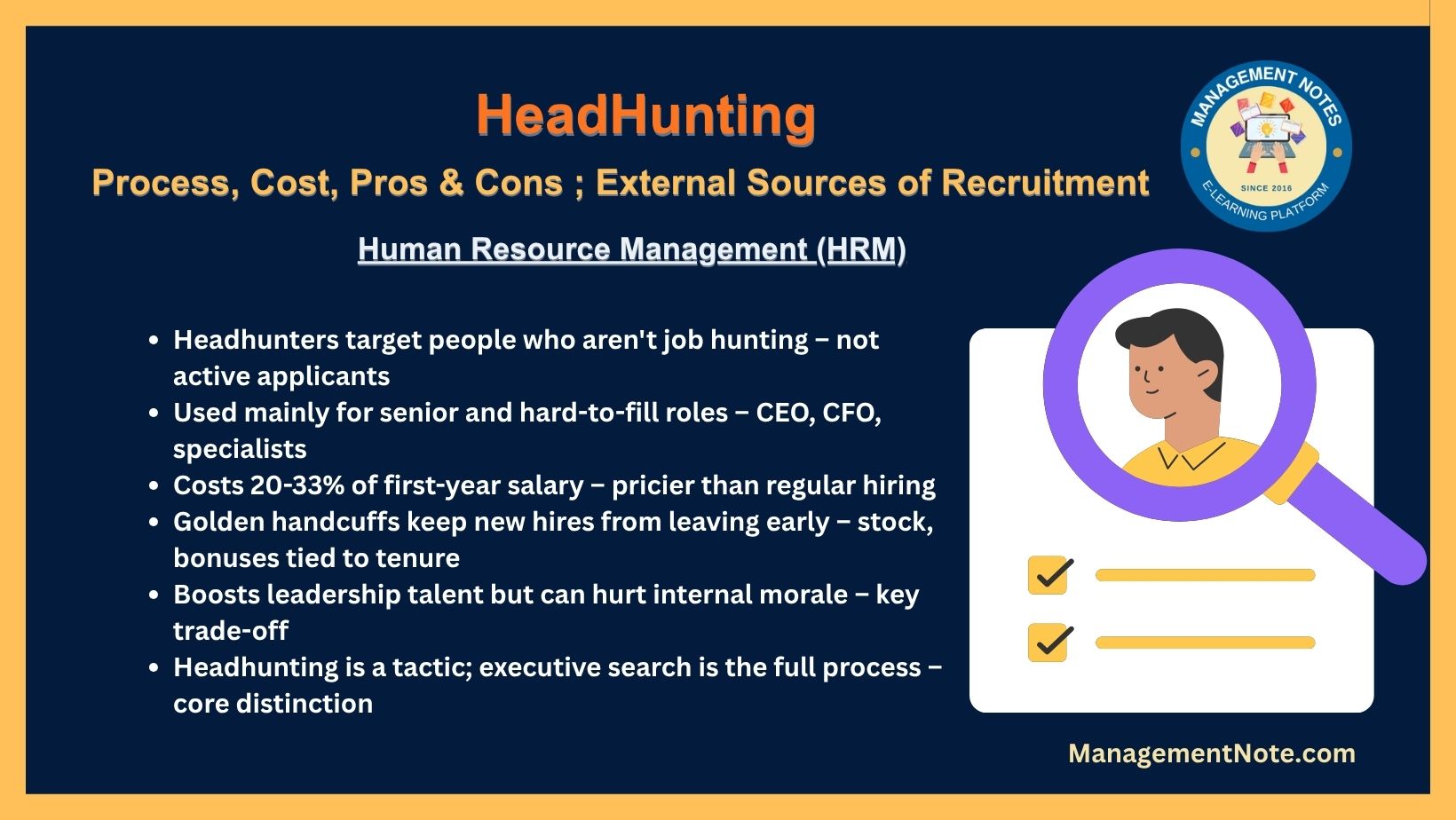
Headhunting is a way of hiring where a trained recruiter, called a headhunter, goes out and finds strong candidates for a job instead of waiting for people to apply. This method is mostly used for senior manager and executive roles like CEO, CFO, or Vice President.
The idea behind headhunting is simple. The best person for a top job is often not job hunting at all. They are doing well where they are. A headhunter’s job is to find that person, talk to them privately, and see if they would consider a new opportunity.
This is very different from normal recruiting. In normal recruiting, a company posts a job and people who want a change send in their resumes. In headhunting, the recruiter picks the target and reaches out first.
Executive search firms like Korn Ferry, Heidrick & Struggles, and Spencer Stuart are some of the most well known names in this industry. They work with large companies across the United States and around the world to fill top leadership roles.
Headhunting vs. Executive Search vs. Regular Recruitment
People often mix up these three terms. Here is a simple table to show the difference.
| Feature | Regular Recruitment | Headhunting | Executive Search |
|---|---|---|---|
| Who applies | Active job seekers | Passive candidates (not looking) | Passive candidates (not looking) |
| Level of role | Entry to mid level | Senior or specialized roles | C-suite and top leadership |
| Approach | Post a job ad, wait for replies | Directly contact one person | Full research based process |
| Cost | Lower | Higher | Highest, often paid upfront |
| Time needed | Days to a few weeks | Weeks | Weeks to months |
| Confidentiality | Low | High | Very high |
In short, headhunting is more of a tactic. Someone reaches out to a specific person. Executive search is the bigger, more structured service that includes headhunting plus market research, background checks, and interviews.
How the Headhunting Process Works
When a company hires a headhunter, the process usually follows these steps.
Step 1: Understand the Role
The headhunter meets with company leaders to learn exactly what the job needs. This includes the skills required, the salary range, and the type of person who would fit the company culture.
Step 2: Search for Candidates
The headhunter then looks for people who match this profile. They usually search in a few places:
- Competitor companies – Looking at people doing similar jobs at rival firms.
- Professional groups and membership lists – Industry associations, trade magazines, and conference attendee lists often reveal strong candidates.
- A private network of headhunters – Recruiters often share leads with trusted contacts in the same field.
- Public records and databases – LinkedIn profiles, press releases, and company reports about promotions and awards.
Step 3: Make Contact
Once a shortlist is ready, the headhunter reaches out privately. This first talk is usually low key. It might sound like a simple market research call, not a direct job offer. This protects the candidate, since they are still working for their current employer.
Step 4: Screen and Present
The headhunter checks the background, references, and interest level of each candidate. Only a few, often two or three, are then introduced to the hiring company. This keeps the process private and focused.
Step 5: Interview and Offer
The company meets the candidates, chooses the best fit, and makes an offer. The headhunter often helps with salary talks and the final deal.
Real Life Example
A well known real world case is how tech companies compete for AI talent. In recent years, firms such as Meta and OpenAI have publicly offered huge pay packages to pull top AI researchers away from rival labs like Google DeepMind.
These researchers were not applying for jobs. They were approached directly, often through private conversations, which is a classic example of headhunting in action.
Another common example happens in finance. A bank looking for a new Chief Financial Officer will rarely find the right person through a job posting. Instead, an executive search firm studies competitor banks, identifies a strong CFO with a proven record, and quietly reaches out to gauge interest.
Advantages of Headhunting
| Advantage | What It Means |
|---|---|
| Access to top talent | You reach people who are not job hunting but are the best in their field. |
| Fresh ideas | Bringing in outside leaders can introduce new thinking and strategies. |
| Saves time for HR teams | The company does not have to sort through hundreds of resumes. |
| Confidential process | Useful when replacing a current leader without alerting the public or staff. |
| Cheaper than training from scratch | Hiring an already skilled manager can cost less than developing one internally over years. |
| Flexibility | Some senior hires come in on a temporary or interim basis, giving the company more room to adjust. |
Disadvantages of Headhunting
| Disadvantage | What It Means |
|---|---|
| High cost | Executive search fees are often 20 to 33 percent of the candidate’s first year pay. |
| Hurts internal morale | Employees hoping for a promotion may feel discouraged when the company hires from outside. |
| Long adjustment period | New leaders need time to learn the company culture, which can slow things down. |
| Disrupts other companies | The business that loses a trained manager also loses time and money spent on their training. |
| Retention risk | A headhunted executive may be headhunted again soon after joining. |
| Risk of bad matches | In rare cases, an unfit candidate could try to bribe a headhunter for a recommendation, so strong screening is needed. |
Golden Handcuffs: How Companies Keep New Hires From Leaving
One real risk of headhunting is that a company spends months and a lot of money hiring a great leader, only to have another headhunter lure them away a year later. To stop this, many businesses use what is called golden handcuffs.
Golden handcuffs are financial rewards, such as stock options, large bonuses, or pension boosts, that only pay out if the executive stays for a set number of years. If they leave early, they lose the reward.
This strategy has clear benefits:
- It reduces turnover among top leaders.
- It protects the company’s investment in recruiting and training.
- It gives leadership more certainty for long term planning.
But it also comes with downsides. Some executives feel trapped in a job they no longer enjoy simply because leaving would cost them too much money. This can lower morale and even affect performance over time. Companies need to balance strong retention pay with real job satisfaction, or the golden handcuffs can backfire.
When Should a Company Use Headhunting?
Not every open position needs a headhunter. It generally makes sense when:
- The role is senior level, such as CEO, CFO, or department head.
- The skills are rare and hard to find through normal job posts.
- The search needs to stay private, such as replacing a current executive.
- The company is going through a merger, acquisition, or big expansion.
- Normal recruiting has already failed to find the right fit.
How to Choose a Good Headhunting Firm
If a business decides to hire a headhunting or executive search firm, here are a few things worth checking:
- Industry experience – Have they placed leaders in your specific field before?
- Track record – Ask for examples of past successful placements.
- Search type – Retained search firms work exclusively for you and are usually more thorough than contingency firms, which only get paid if they place someone.
- Confidentiality practices – Make sure they have a clear plan to protect candidate and company privacy.
- Clear contract terms – Understand the fee structure and any guarantee period if the hire does not work out.
Frequently Asked Questions
What is the difference between headhunting and recruiting?
Recruiting usually deals with active job seekers who apply for open roles. Headhunting targets specific people who are already employed and not looking for a new job.
Is headhunting only for executive jobs?
Mostly yes, but it is also used for highly specialized roles, such as senior engineers, data scientists, or technical experts who are hard to find through normal hiring.
How much does headhunting cost?
Fees usually range between 20 and 33 percent of the hired person’s first year salary, though this can change based on the firm and role.
Is headhunting legal? Yes, headhunting is completely legal. However, some employment contracts include non-compete or non-solicitation clauses that can limit how soon a person can join a competitor.
What are golden handcuffs in simple terms?
Golden handcuffs are pay or benefits, like stock or bonuses, that an employee only gets to keep in full if they stay with the company for a certain number of years.
Can a headhunter contact someone who is not looking for a job?
Yes. This is actually the main idea behind headhunting. Most candidates approached by headhunters were not planning to change jobs at all.
What is the difference between headhunting and executive search?
Headhunting is the act of directly contacting a candidate. Executive search is the full, structured process, which includes market research, headhunting, screening, and interviews.
Key Takeaways
- Headhunting is a direct, targeted way to hire senior talent who are not job hunting.
- The process includes researching competitors, using professional networks, and privately reaching out to candidates.
- It brings strong benefits like access to top talent and fresh ideas, but it is costly and can hurt internal morale.
- Golden handcuffs help companies protect their investment after a headhunted hire joins.
- Businesses should use headhunting mainly for senior, hard to fill, or confidential roles.
Similarly, You May Also Like:
- Human Resources Diagram – Human Resource Management (HRM) | Management Notes
- Raiding – External Sources of Recruitment | Human Resource Management

MBA- Finance Specialization
I am Smirti Bam, an enthusiastic edu blogger with a passion for sharing insights into the dynamic world of business and management through this website.
I hold a MBA degree from Presidential Business School, Kathmandu, and a BBA degree with a specialization in Finance from Apex College,
- Onboarding Vs. Orientation: Key Differences, Benefits, Process & Best Practices | Human Resource Management (HRM) - September 24, 2026
- Moonlighting Vs Freelancing: Meaning, Differences & Risks Explained | Human Resource Management (HRM) - September 14, 2026
- Employee Retention Vs. Employee Engagement: Key Differences Explained | Human Resource Management - September 6, 2026


